Skip to product information

A-Level Philosophy | Full Syllabus Pack

A-Level Philosophy | Full Syllabus Pack

 4.9/5 from 800+ KPC reviews
Regular price €74,95
Sale price €74,95 Regular price €89,90
SAVE 16% Sold out
browser_updated
 

BUNDLE & SAVE

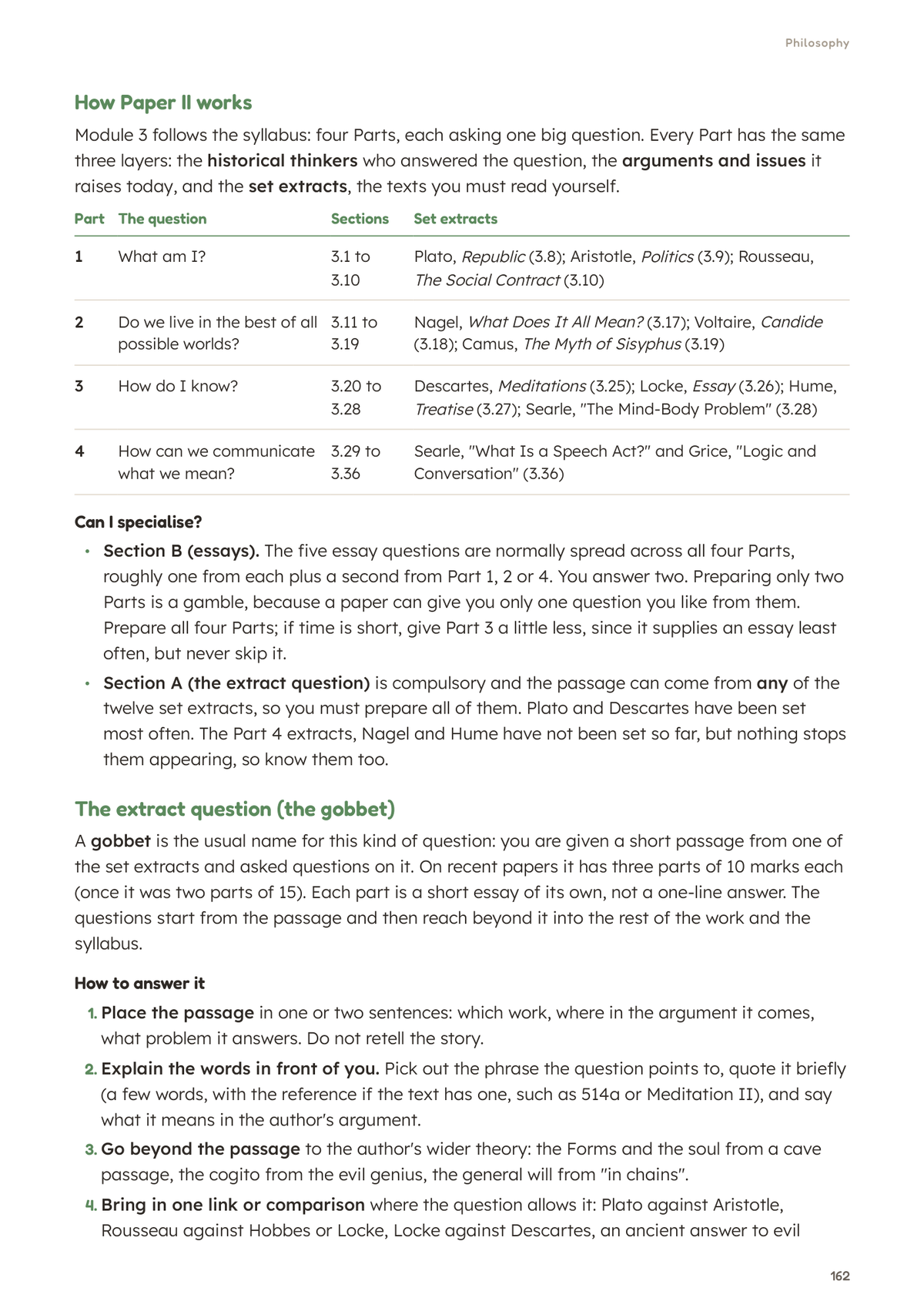
Everything for A-Level Philosophy (MATSEC AM 25), both papers: a Note Pack that teaches the full syllabus in 59 sections, and a Model Answers book with 6 logic practice papers solved in full, 66 model essays and 15 extract answers.

menu_book

What's inside?

  • Note Pack: 59 sections in syllabus order: 11 on Logic and Reasoning, 12 on Ethics and Society and 36 on Key Questions in European Thought
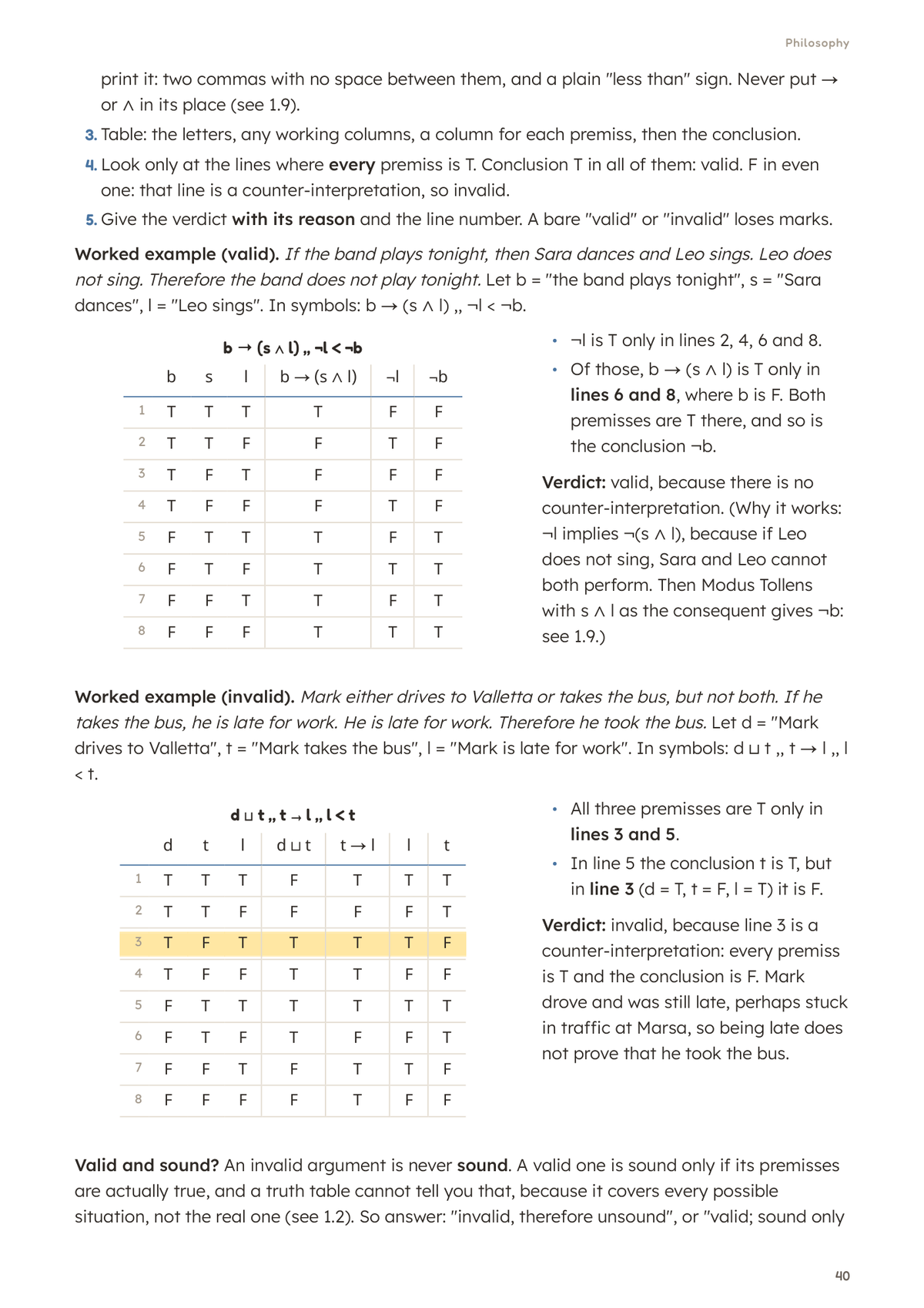
  • 51 truth tables, worked out line by line in the order the papers use
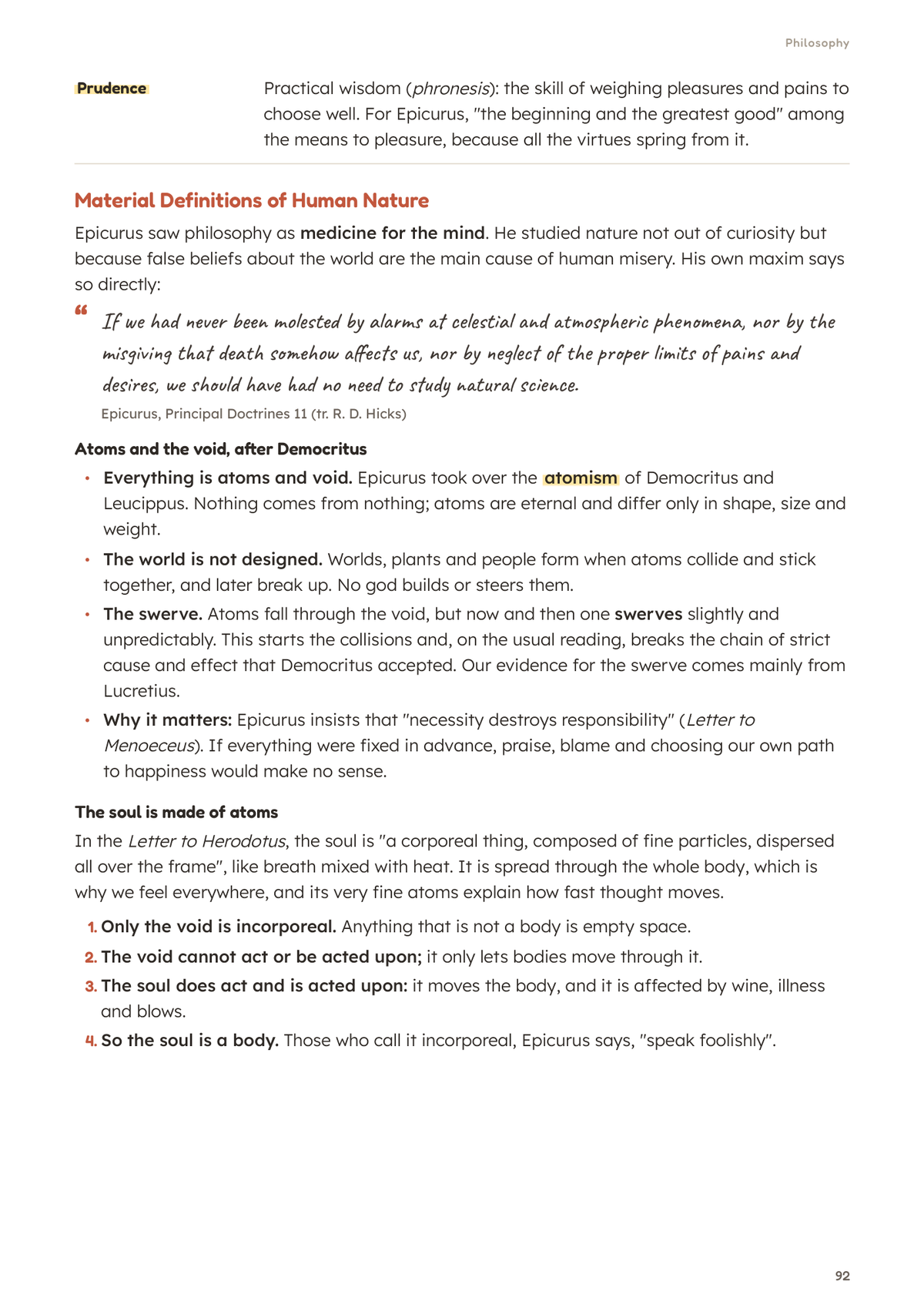
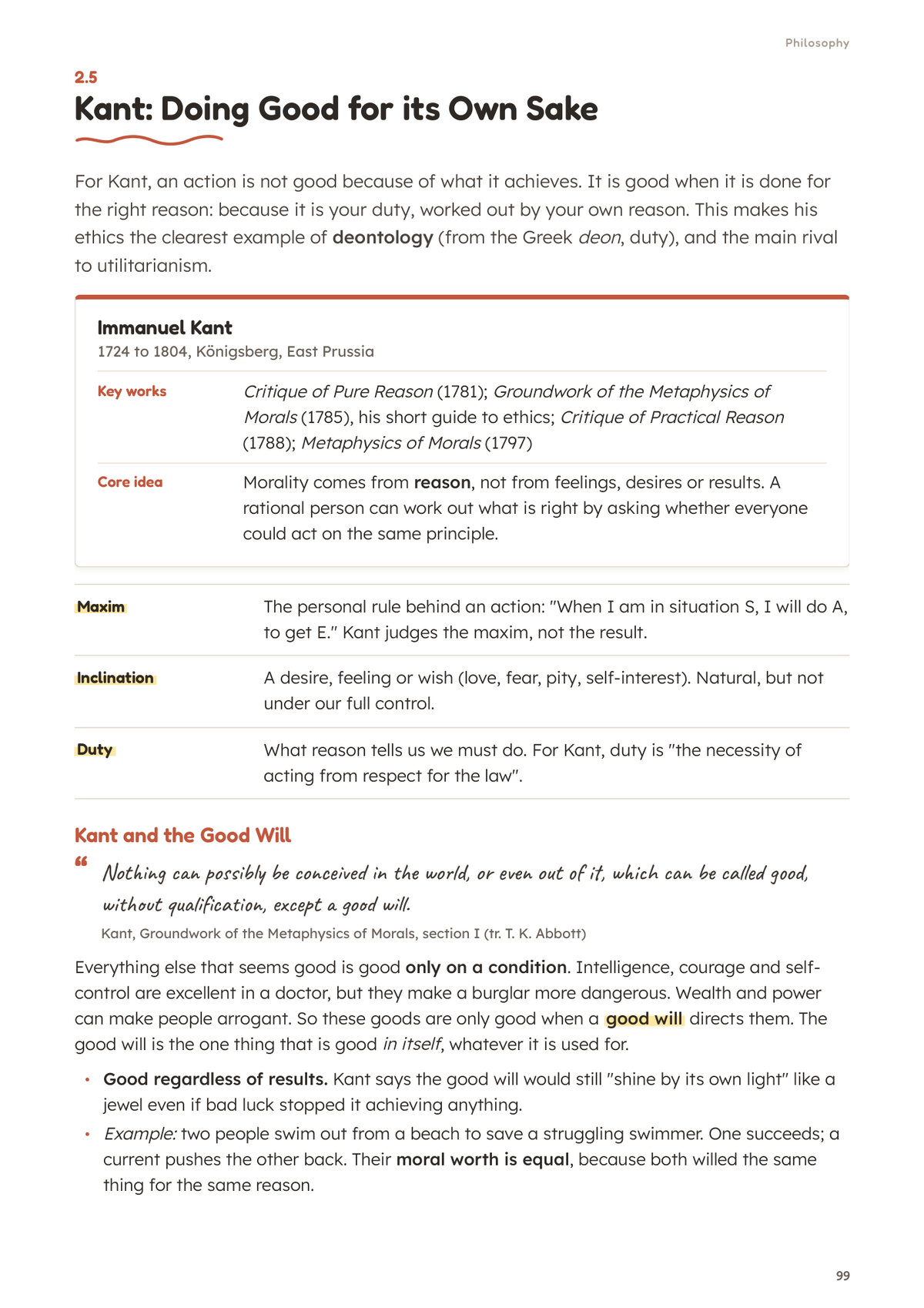
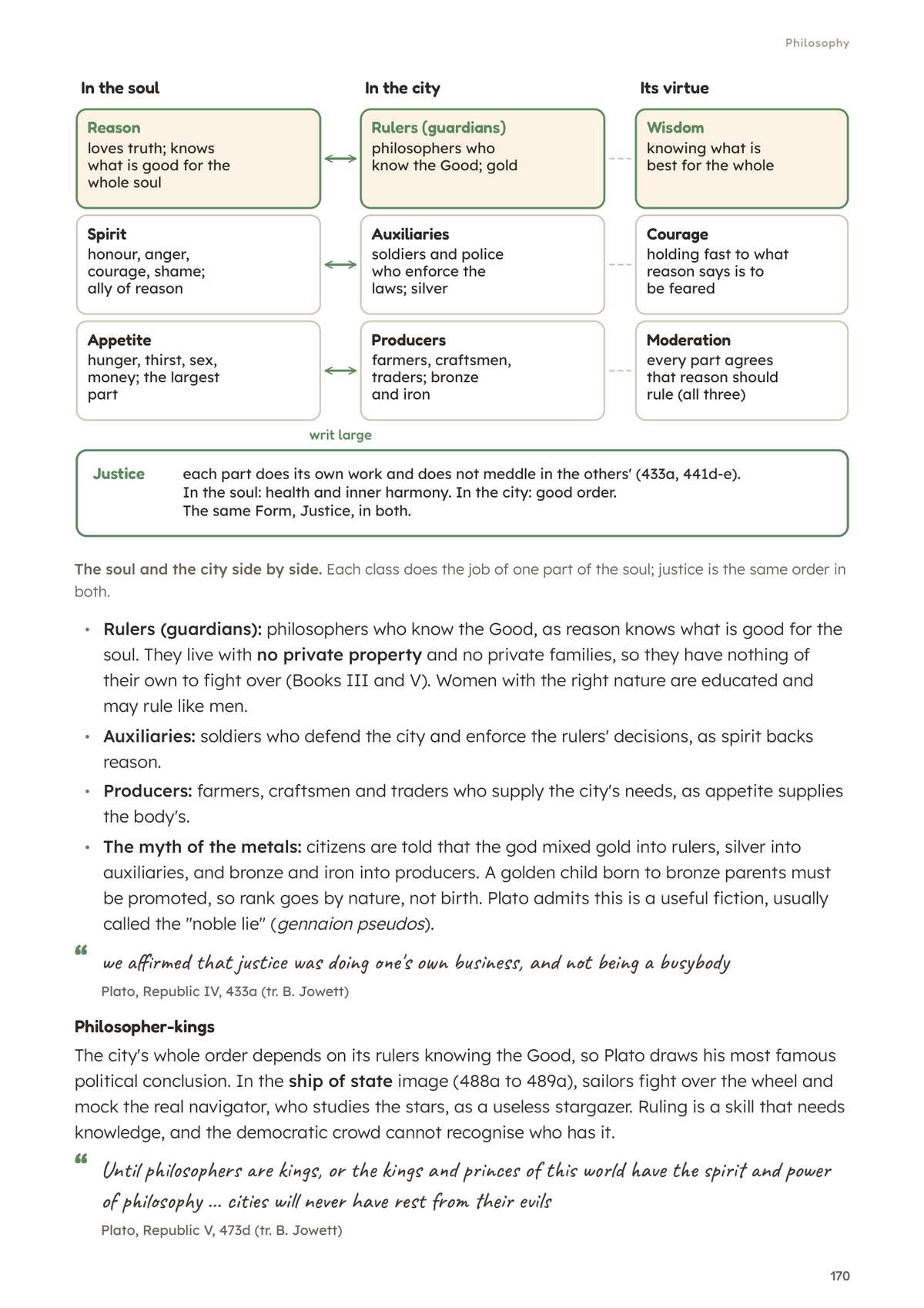
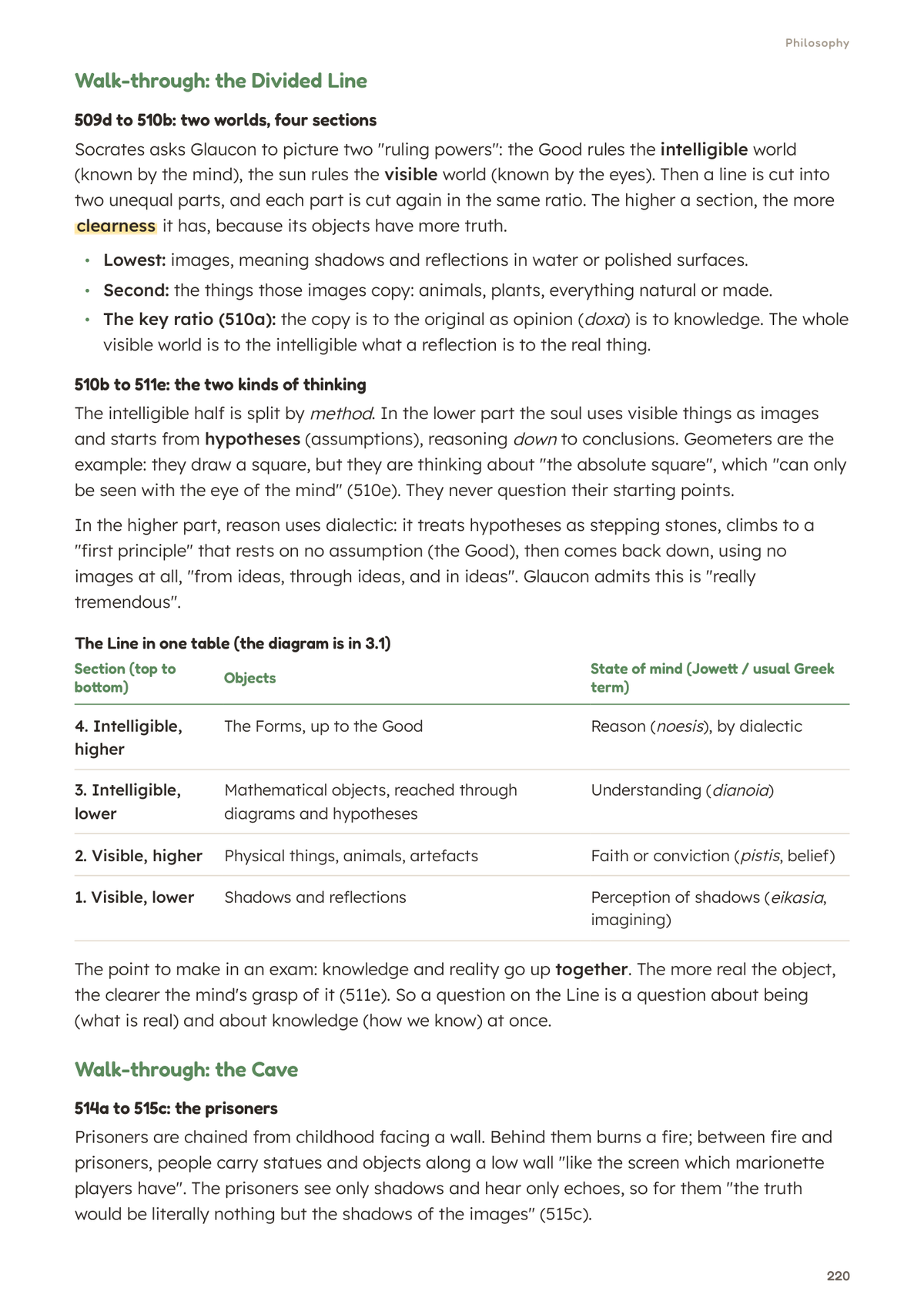
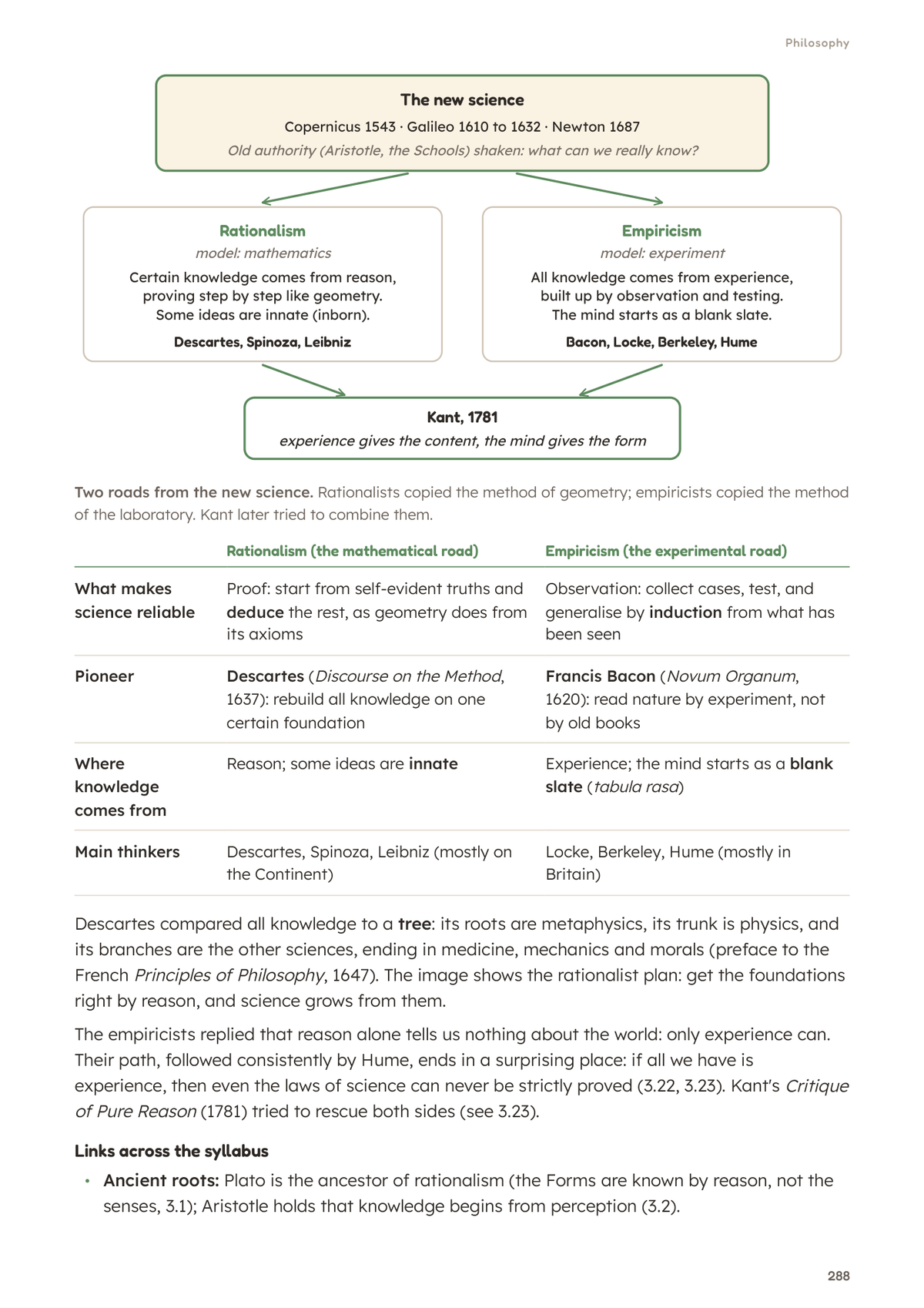
  • 75 diagrams and 144 tables, including side-by-side comparisons of the thinkers
  • An index card for each philosopher: dates, key works and the core idea
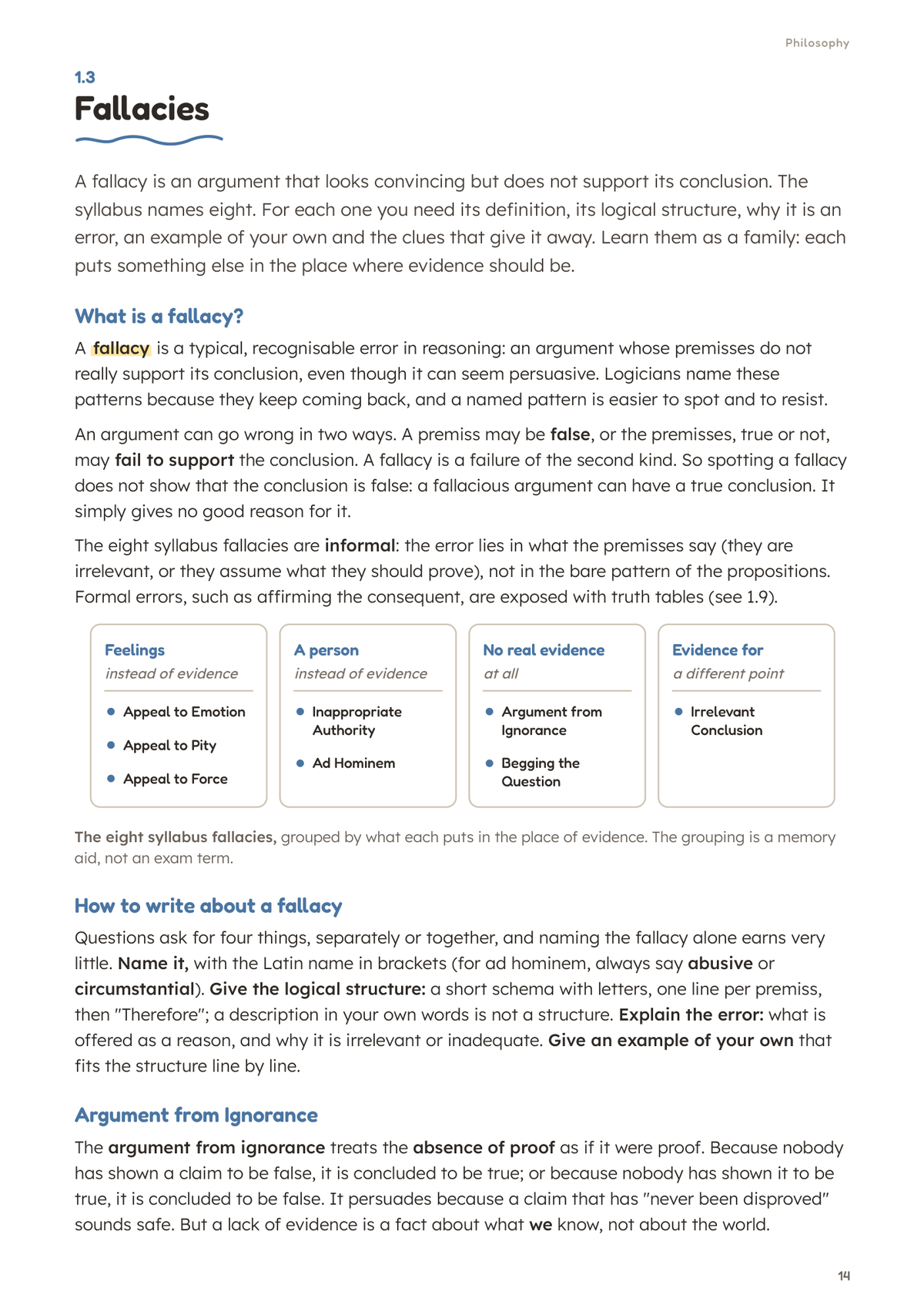
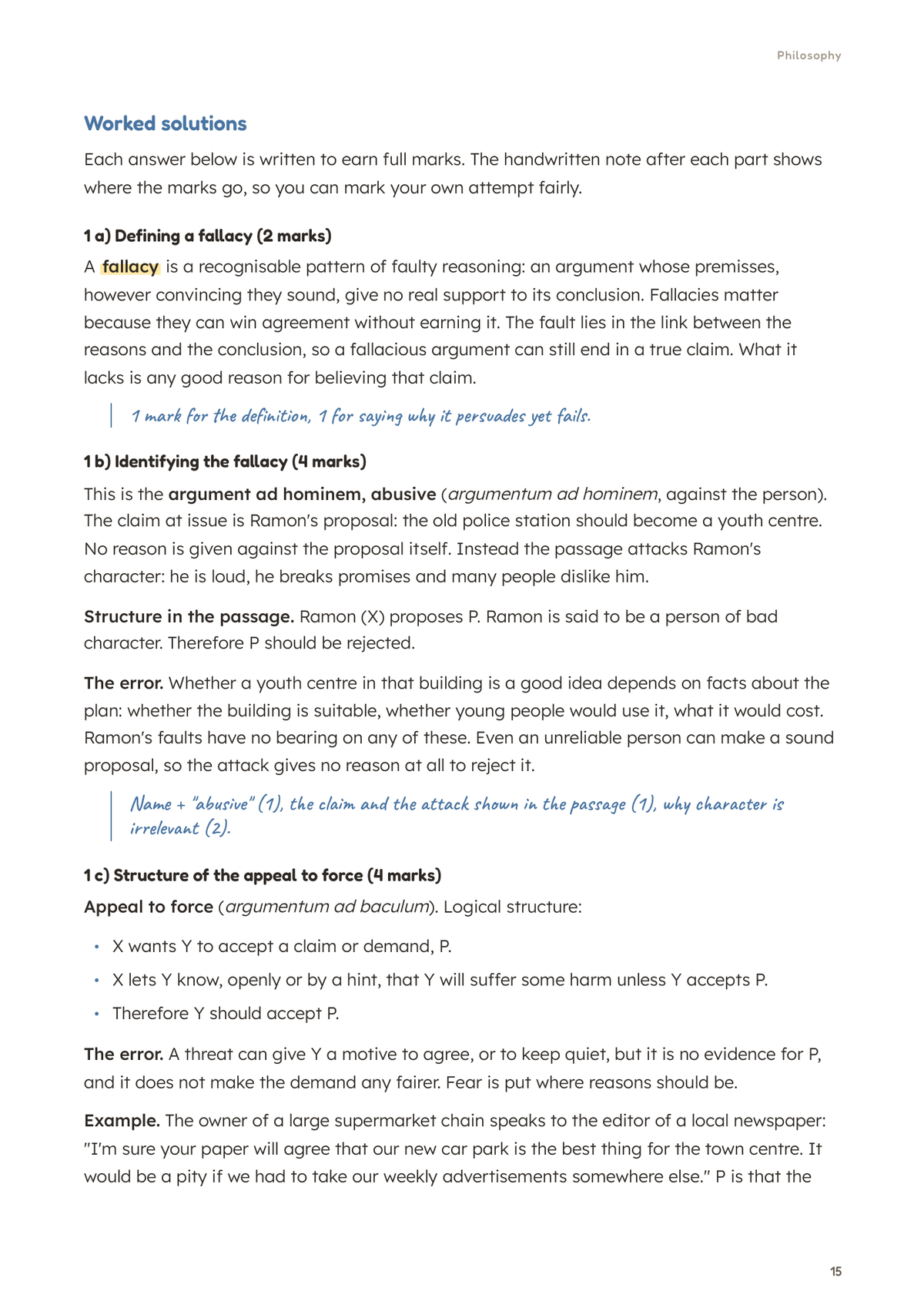
  • Every fallacy on the syllabus, each with its structure, an example and how to spot it
  • Every section ends with In the exam: the ways the topic is asked and a short plan for answering
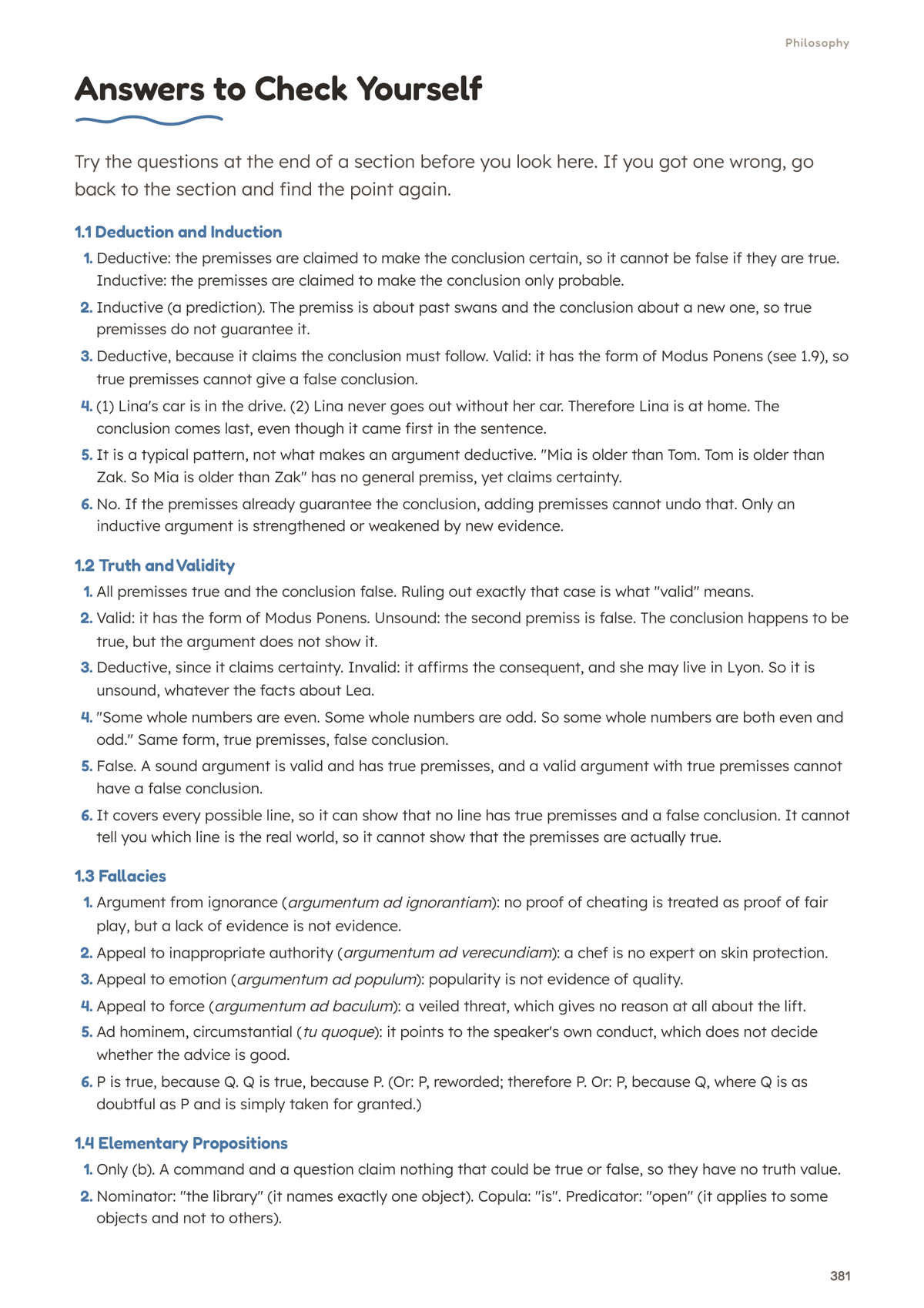
  • 347 Check yourself questions, a few at the end of every section, with the answers at the back
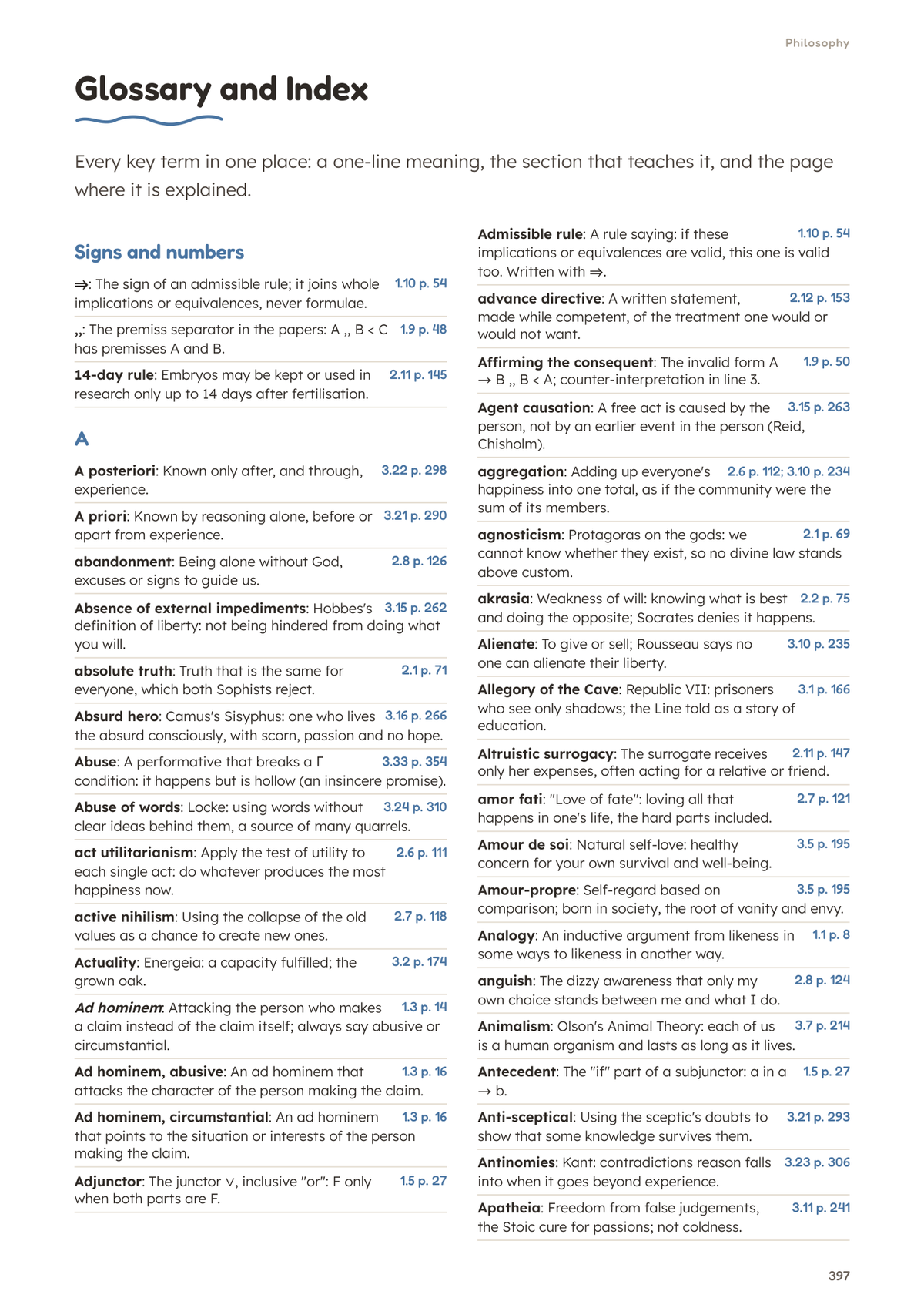
  • A Glossary and Index of 861 key terms, each with a one-line meaning and its page
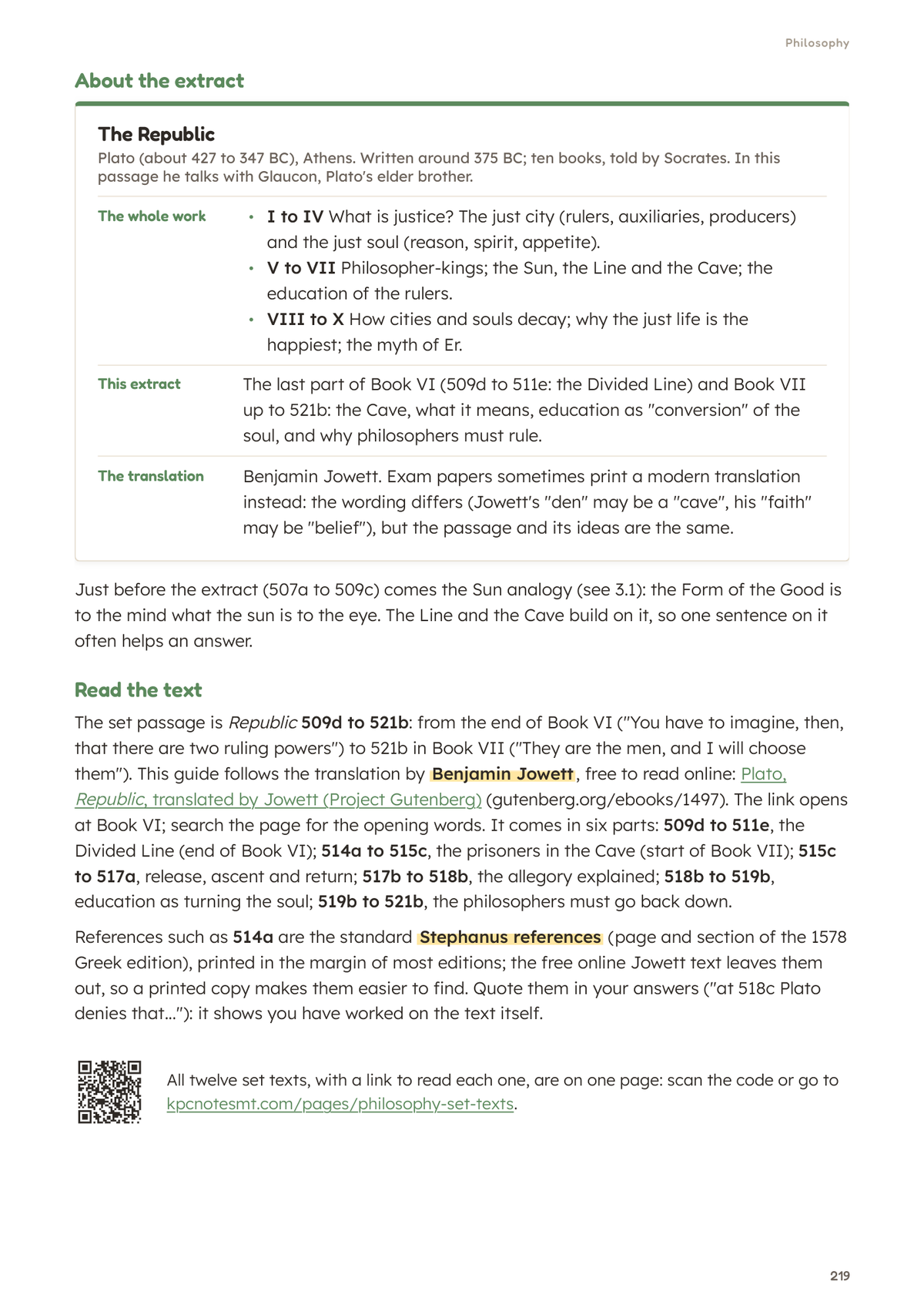
  • 11 set-text guides covering all 12 set texts for Paper II, each with a walk-through of the passage and what examiners link it to
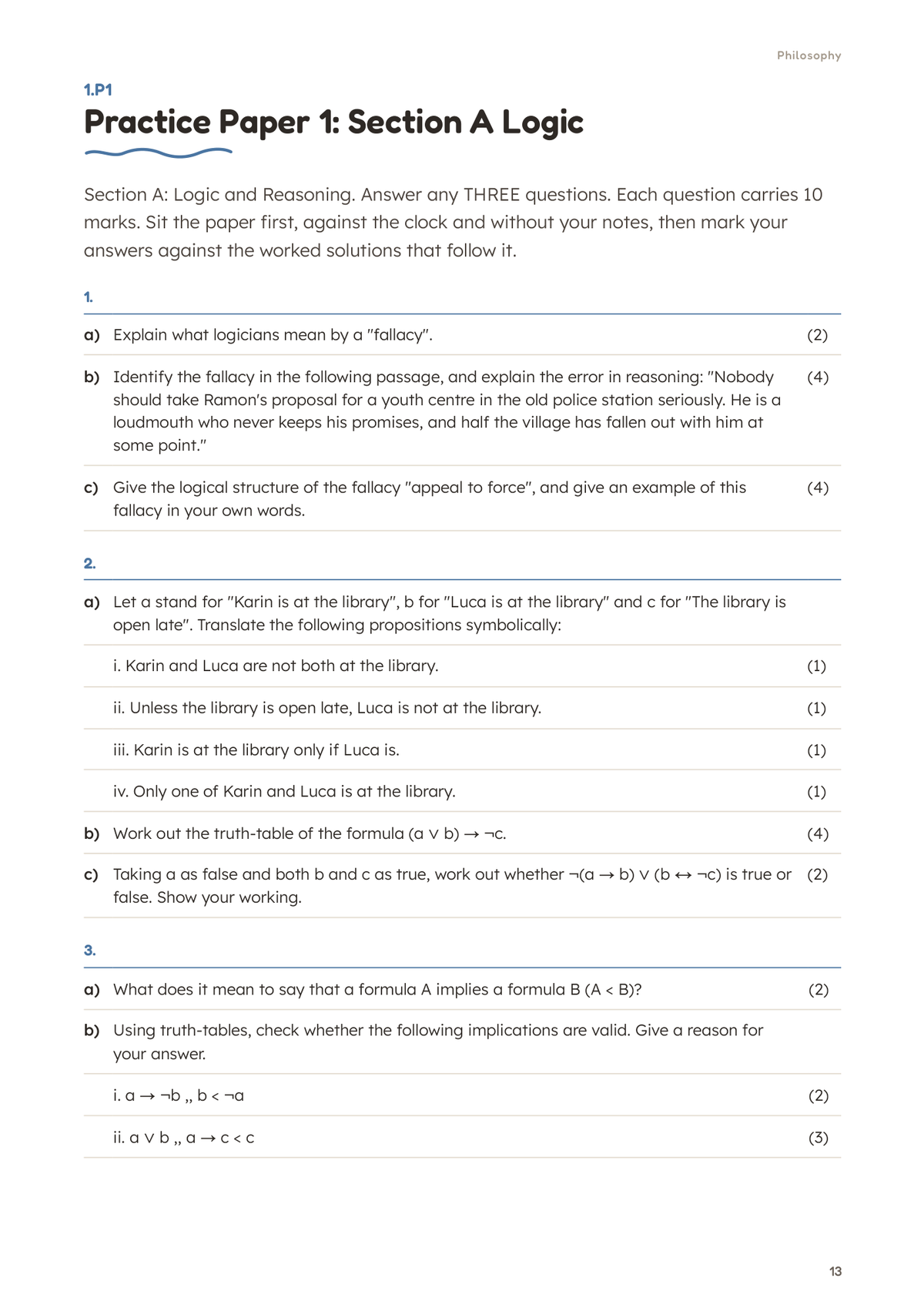
  • Model Answers: 6 complete Section A logic papers in the exam format, each with a full-marks worked solution
  • Between them, the 6 papers cover all 29 types of logic question found in past papers
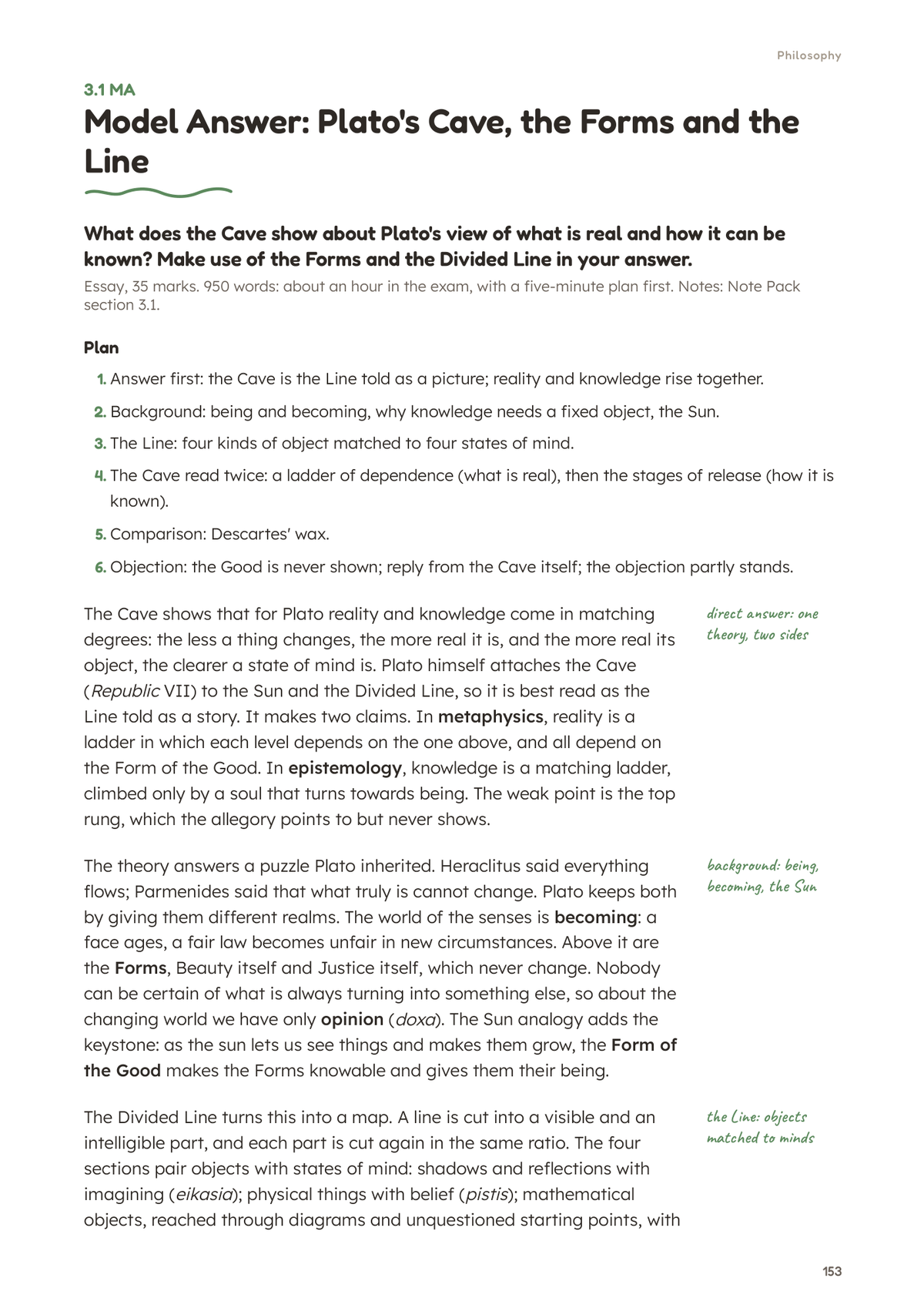
  • 31 model essays for Paper I Section B, at least one for every Ethics topic
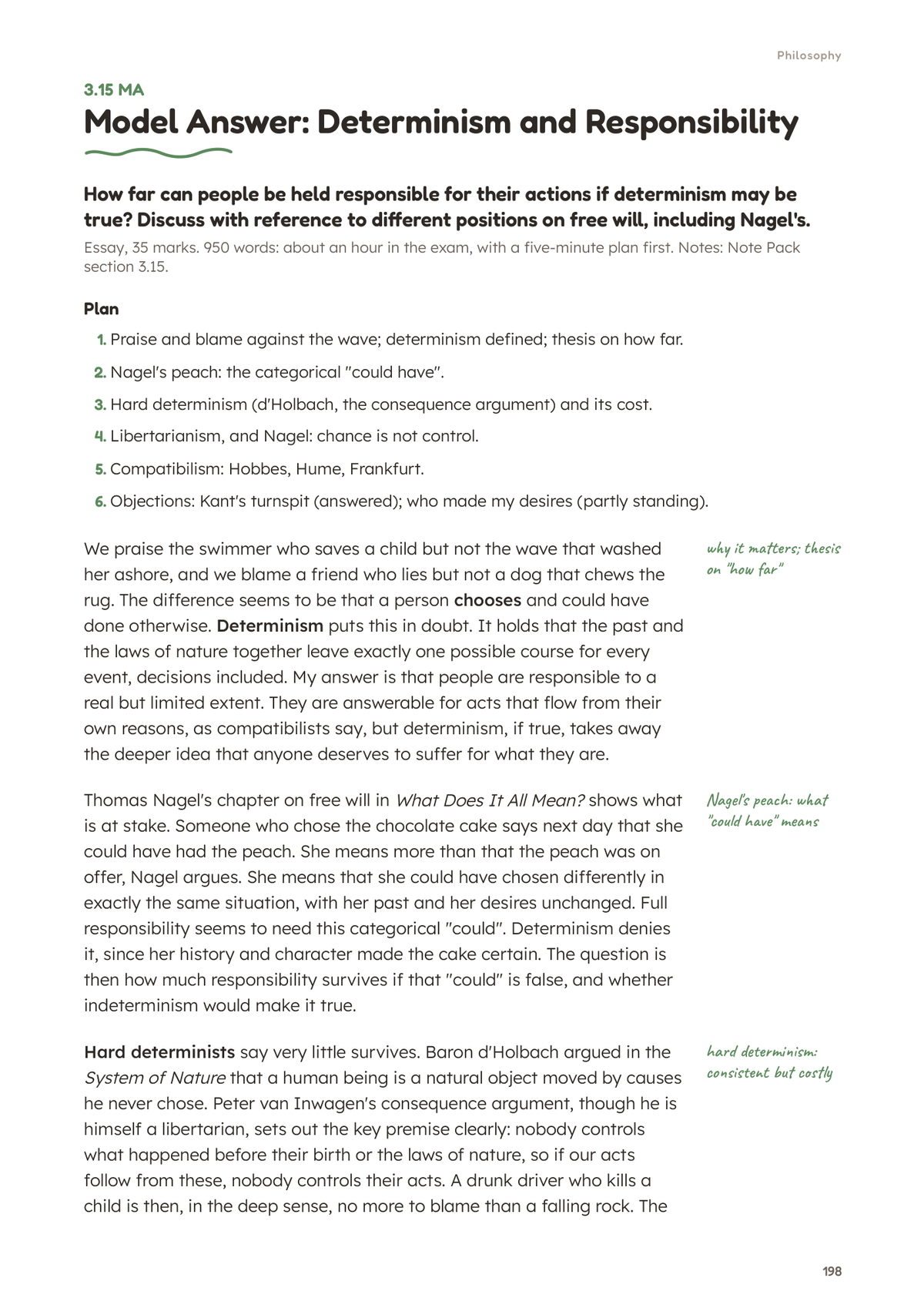
  • 35 model essays for Paper II Section B, across Module 3
  • 15 extract answers for Paper II Section A, on passages from all 12 set texts
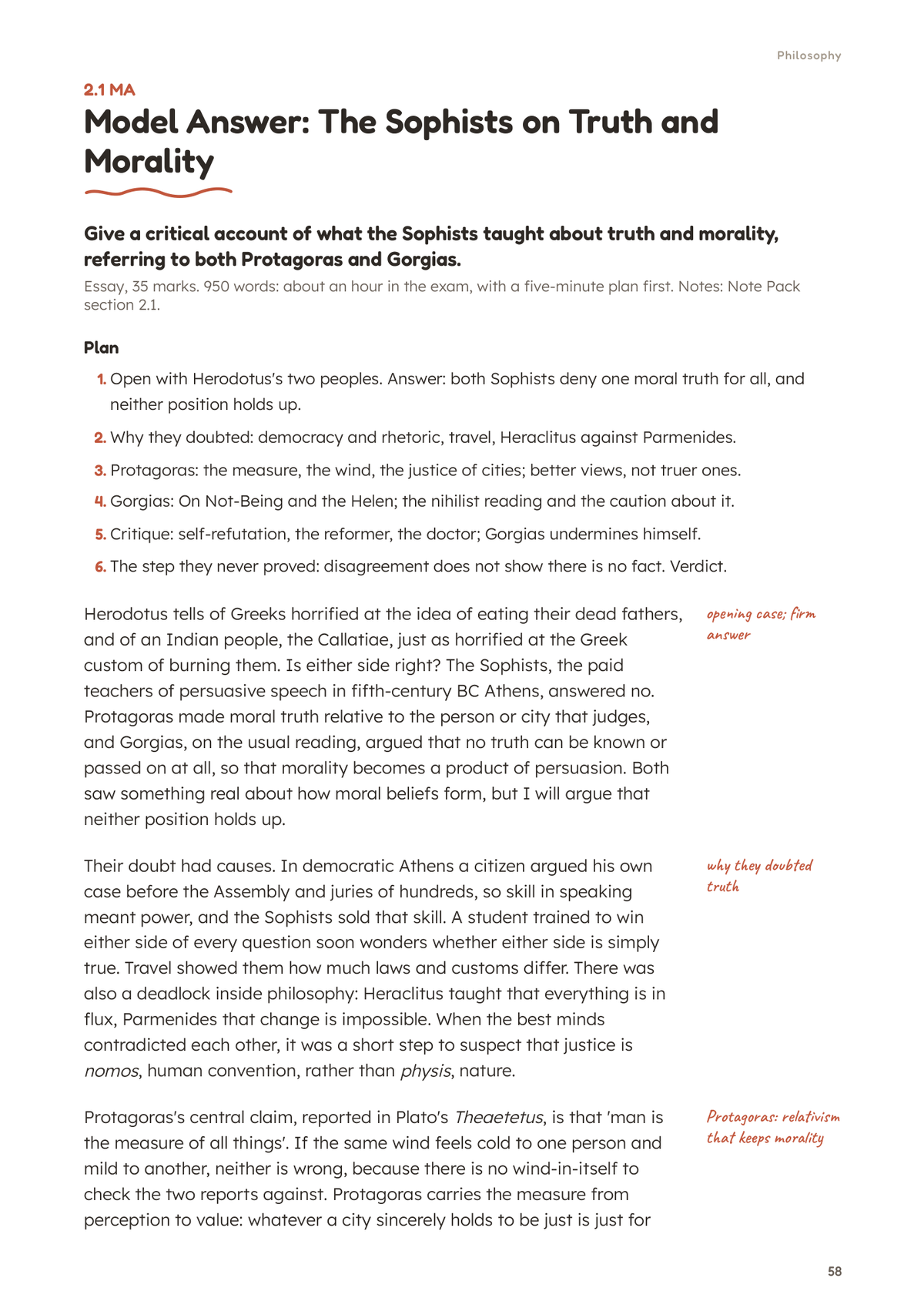
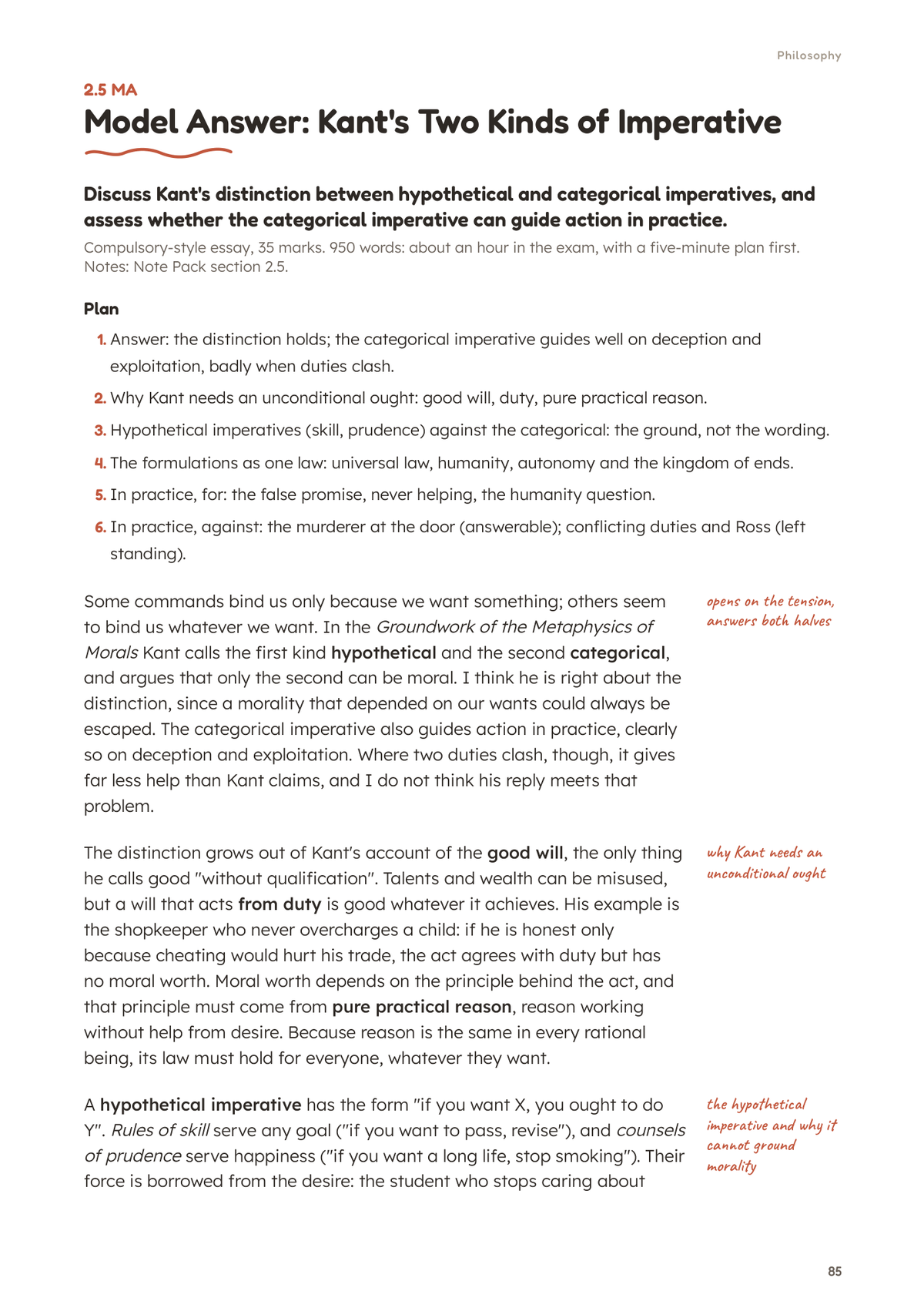
  • Each essay has a plan and margin notes on what each paragraph does, at 850 to 950 words: what a strong candidate can write by hand in an hour
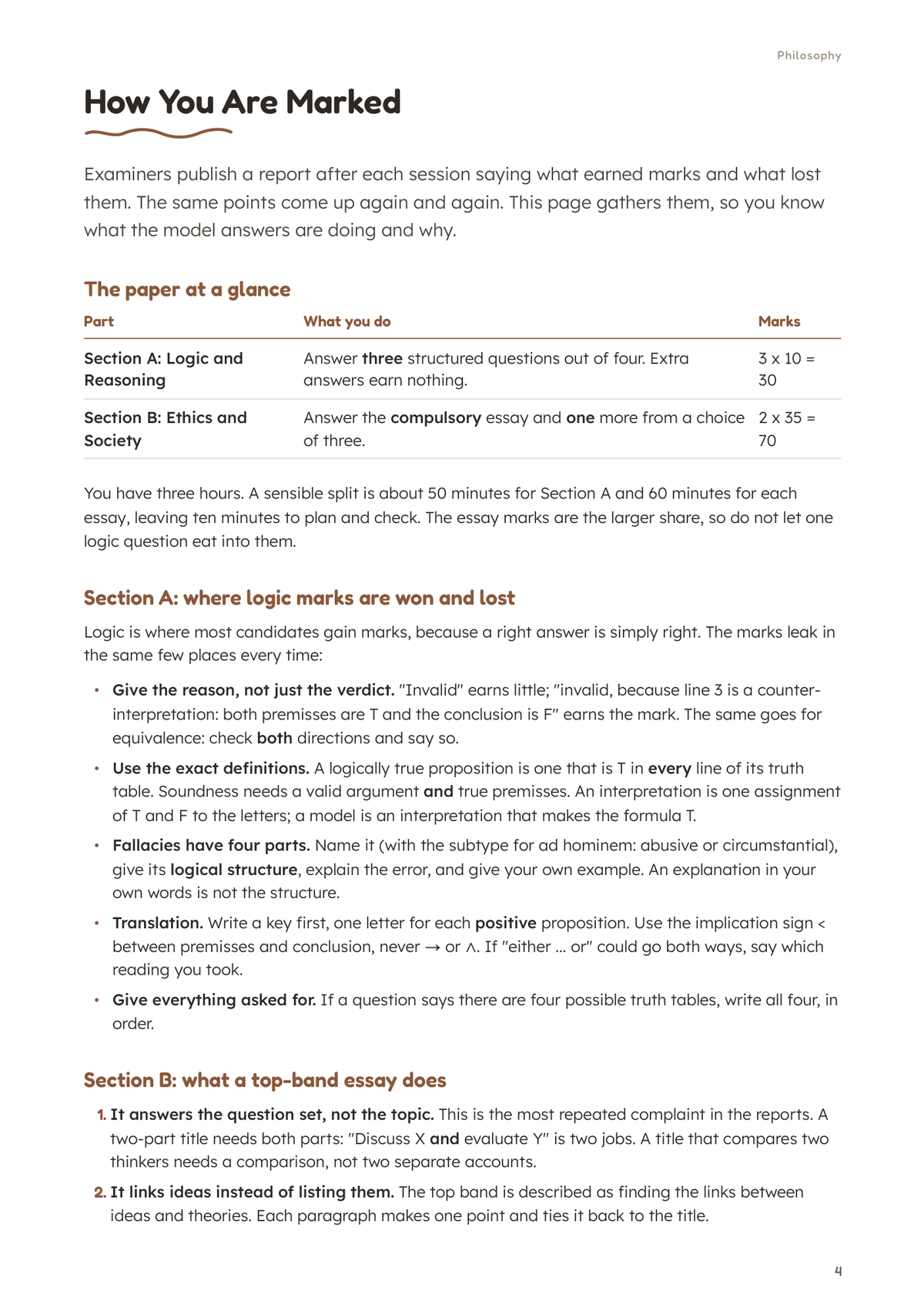
  • How You Are Marked: where the marks go, and what earns or loses them
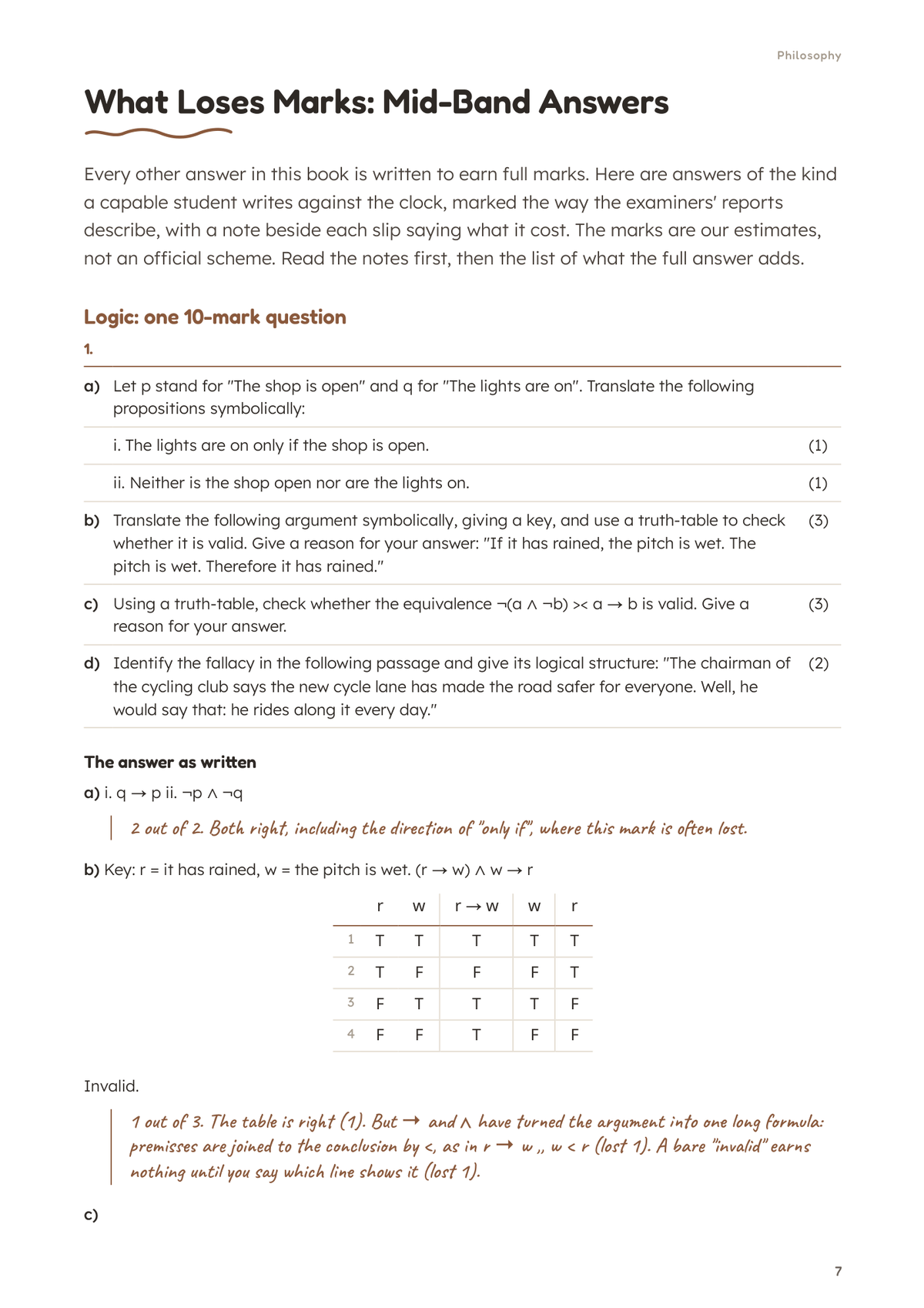
  • What Loses Marks: mid-band answers with every slip marked, to compare with the model answers
description

How many pages?

  • Note Pack + Model Answers: 736 pages in two PDFs
  • Note Pack only: 415 pages
  • Model Answers only: 321 pages
person

Who is it for?

  • Students sitting MATSEC Advanced Level Philosophy (AM 25)
  • Written for self-study: every topic is explained, not just summarised, so you can learn it on your own
  • Paper I and the Intermediate paper share the same syllabus, so the logic and ethics are taught in full here
assignment

Which exam does it match?

  • MATSEC Advanced Level Philosophy (AM 25), the current syllabus, both papers
  • Paper I (three hours): Section A Logic, three structured questions out of four (30 marks); Section B Ethics, the compulsory essay and one more (70 marks)
  • Paper II (three hours): Section A, questions on a passage from one of the 12 set texts (30 marks); Section B, two essays out of five (70 marks)
list

Which sections are covered?

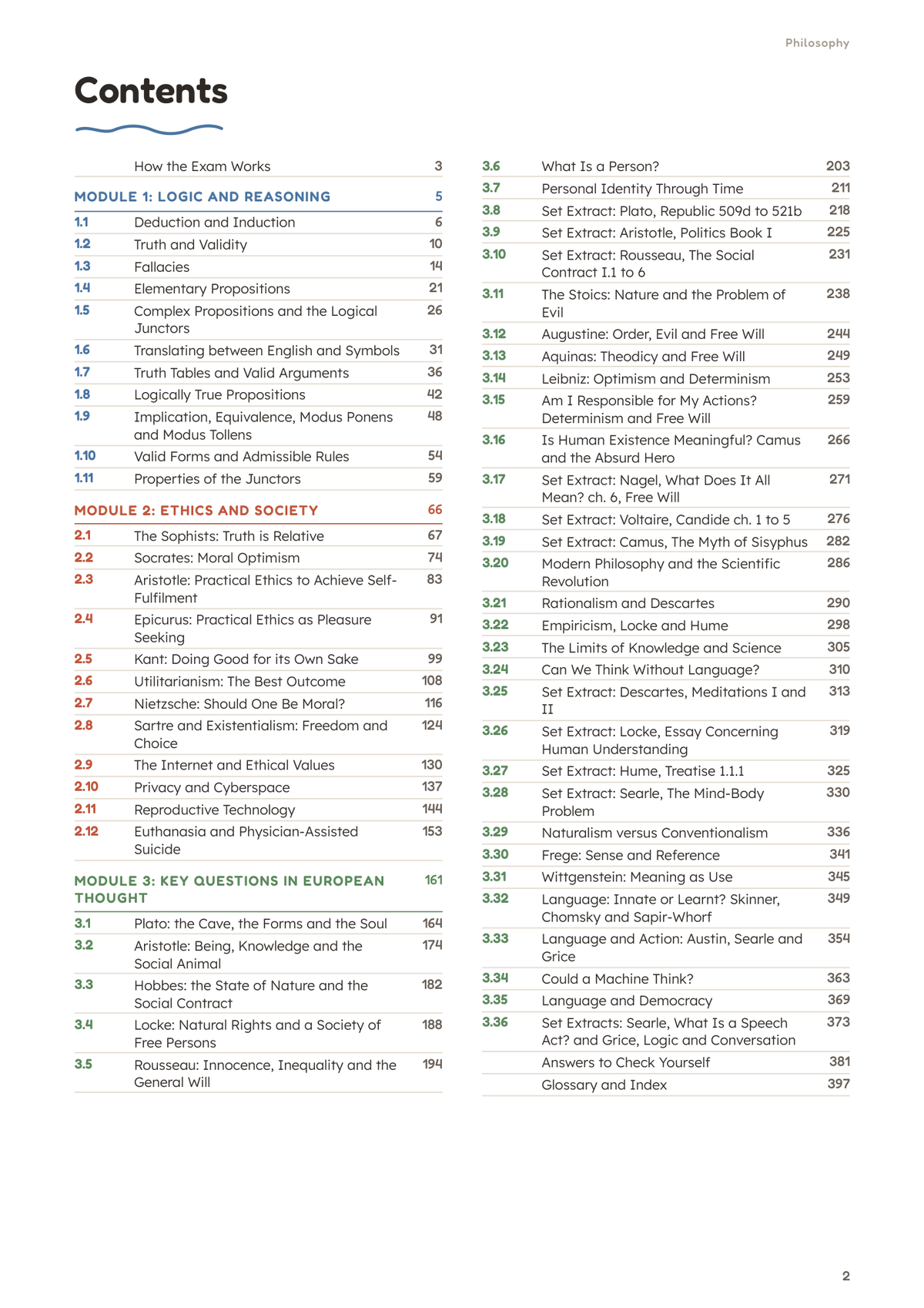
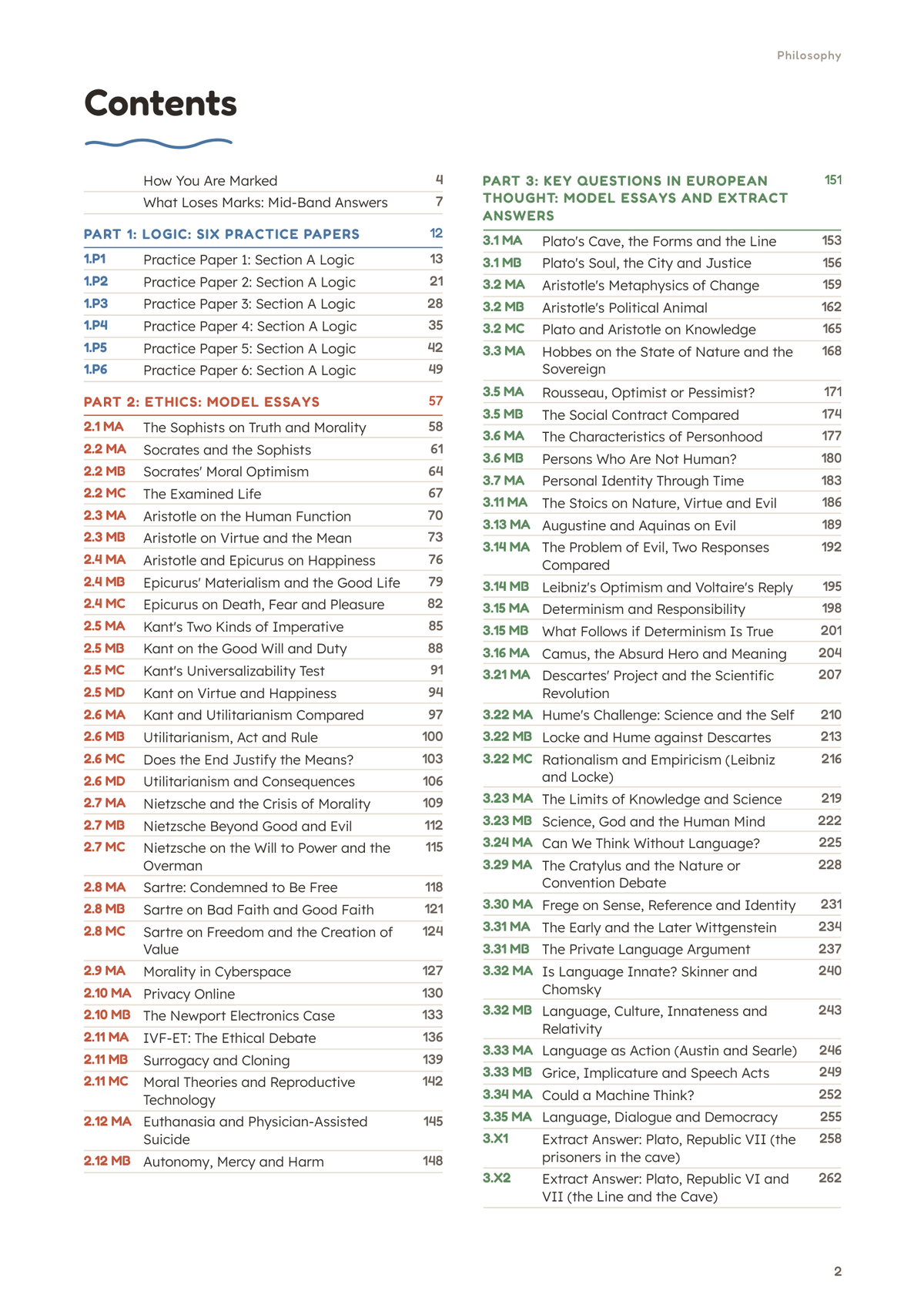
  • Module 1, Logic and Reasoning: 1.1 Deduction and Induction; 1.2 Truth and Validity; 1.3 Fallacies; 1.4 Elementary Propositions; 1.5 Complex Propositions and the Logical Junctors; 1.6 Translating between English and Symbols; 1.7 Truth Tables and Valid Arguments; 1.8 Logically True Propositions; 1.9 Implication, Equivalence, Modus Ponens and Modus Tollens; 1.10 Valid Forms and Admissible Rules; 1.11 Properties of the Junctors
  • Module 2, Ethics and Society: 2.1 The Sophists: Truth is Relative; 2.2 Socrates: Moral Optimism; 2.3 Aristotle: Practical Ethics to Achieve Self-Fulfilment; 2.4 Epicurus: Practical Ethics as Pleasure Seeking; 2.5 Kant: Doing Good for its Own Sake; 2.6 Utilitarianism: The Best Outcome; 2.7 Nietzsche: Should One Be Moral?; 2.8 Sartre and Existentialism: Freedom and Choice; 2.9 The Internet and Ethical Values; 2.10 Privacy and Cyberspace; 2.11 Reproductive Technology; 2.12 Euthanasia and Physician-Assisted Suicide
  • Module 3, Key Questions in European Thought: 3.1 Plato: the Cave, the Forms and the Soul; 3.2 Aristotle: Being, Knowledge and the Social Animal; 3.3 Hobbes: the State of Nature and the Social Contract; 3.4 Locke: Natural Rights and a Society of Free Persons; 3.5 Rousseau: Innocence, Inequality and the General Will; 3.6 What Is a Person?; 3.7 Personal Identity Through Time; 3.8 Set Extract: Plato, Republic 509d to 521b; 3.9 Set Extract: Aristotle, Politics Book I; 3.10 Set Extract: Rousseau, The Social Contract I.1 to 6; 3.11 The Stoics: Nature and the Problem of Evil; 3.12 Augustine: Order, Evil and Free Will; 3.13 Aquinas: Theodicy and Free Will; 3.14 Leibniz: Optimism and Determinism; 3.15 Am I Responsible for My Actions? Determinism and Free Will; 3.16 Is Human Existence Meaningful? Camus and the Absurd Hero; 3.17 Set Extract: Nagel, What Does It All Mean? ch. 6, Free Will; 3.18 Set Extract: Voltaire, Candide ch. 1 to 5; 3.19 Set Extract: Camus, The Myth of Sisyphus; 3.20 Modern Philosophy and the Scientific Revolution; 3.21 Rationalism and Descartes; 3.22 Empiricism, Locke and Hume; 3.23 The Limits of Knowledge and Science; 3.24 Can We Think Without Language?; 3.25 Set Extract: Descartes, Meditations I and II; 3.26 Set Extract: Locke, Essay Concerning Human Understanding; 3.27 Set Extract: Hume, Treatise 1.1.1; 3.28 Set Extract: Searle, The Mind-Body Problem; 3.29 Naturalism versus Conventionalism; 3.30 Frege: Sense and Reference; 3.31 Wittgenstein: Meaning as Use; 3.32 Language: Innate or Learnt? Skinner, Chomsky and Sapir-Whorf; 3.33 Language and Action: Austin, Searle and Grice; 3.34 Could a Machine Think?; 3.35 Language and Democracy; 3.36 Set Extracts: Searle, What Is a Speech Act? and Grice, Logic and Conversation
link

What about the set texts?

  • The Note Pack has a guide to each of the 12 set texts for Paper II (11 guides, as Searle on speech acts and Grice share one)
  • The set texts themselves are not reprinted in the books
  • All 12 are linked from kpcnotesmt.com/pages/philosophy-set-texts, and a QR code in each guide takes you straight there
edit_note

Which answers are included?

  • Logic: 6 practice papers, each solved in full, with 38 truth tables in the solutions
  • The Sophists (1): The Sophists on Truth and Morality
  • Socrates (3): Socrates and the Sophists; Socrates' Moral Optimism; The Examined Life
  • Aristotle (2): Aristotle on the Human Function; Aristotle on Virtue and the Mean
  • Epicurus (3): Aristotle and Epicurus on Happiness; Epicurus' Materialism and the Good Life; Epicurus on Death, Fear and Pleasure
  • Kant (4): Kant's Two Kinds of Imperative; Kant on the Good Will and Duty; Kant's Universalizability Test; Kant on Virtue and Happiness
  • Utilitarianism (4): Kant and Utilitarianism Compared; Utilitarianism, Act and Rule; Does the End Justify the Means?; Utilitarianism and Consequences
  • Nietzsche (3): Nietzsche and the Crisis of Morality; Nietzsche Beyond Good and Evil; Nietzsche on the Will to Power and the Overman
  • Sartre and Existentialism (3): Sartre: Condemned to Be Free; Sartre on Bad Faith and Good Faith; Sartre on Freedom and the Creation of Value
  • The Internet and Ethical Values (1): Morality in Cyberspace
  • Privacy and Cyberspace (2): Privacy Online; The Newport Electronics Case
  • Reproductive Technology (3): IVF-ET: The Ethical Debate; Surrogacy and Cloning; Moral Theories and Reproductive Technology
  • Euthanasia and Physician-Assisted Suicide (2): Euthanasia and Physician-Assisted Suicide; Autonomy, Mercy and Harm
  • Paper II essays: Plato's Cave, the Forms and the Line; Plato's Soul, the City and Justice; Aristotle's Metaphysics of Change; Aristotle's Political Animal; Plato and Aristotle on Knowledge; Hobbes on the State of Nature and the Sovereign; Rousseau, Optimist or Pessimist?; The Social Contract Compared; The Characteristics of Personhood; Persons Who Are Not Human?; Personal Identity Through Time; The Stoics on Nature, Virtue and Evil; Augustine and Aquinas on Evil; The Problem of Evil, Two Responses Compared; Leibniz's Optimism and Voltaire's Reply; Determinism and Responsibility; What Follows if Determinism Is True; Camus, the Absurd Hero and Meaning; Descartes' Project and the Scientific Revolution; Hume's Challenge: Science and the Self; Locke and Hume against Descartes; Rationalism and Empiricism (Leibniz and Locke); The Limits of Knowledge and Science; Science, God and the Human Mind; Can We Think Without Language?; The Cratylus and the Nature or Convention Debate; Frege on Sense, Reference and Identity; The Early and the Later Wittgenstein; The Private Language Argument; Is Language Innate? Skinner and Chomsky; Language, Culture, Innateness and Relativity; Grice, Implicature and Speech Acts; Language as Action (Austin and Searle); Could a Machine Think?; Language, Dialogue and Democracy
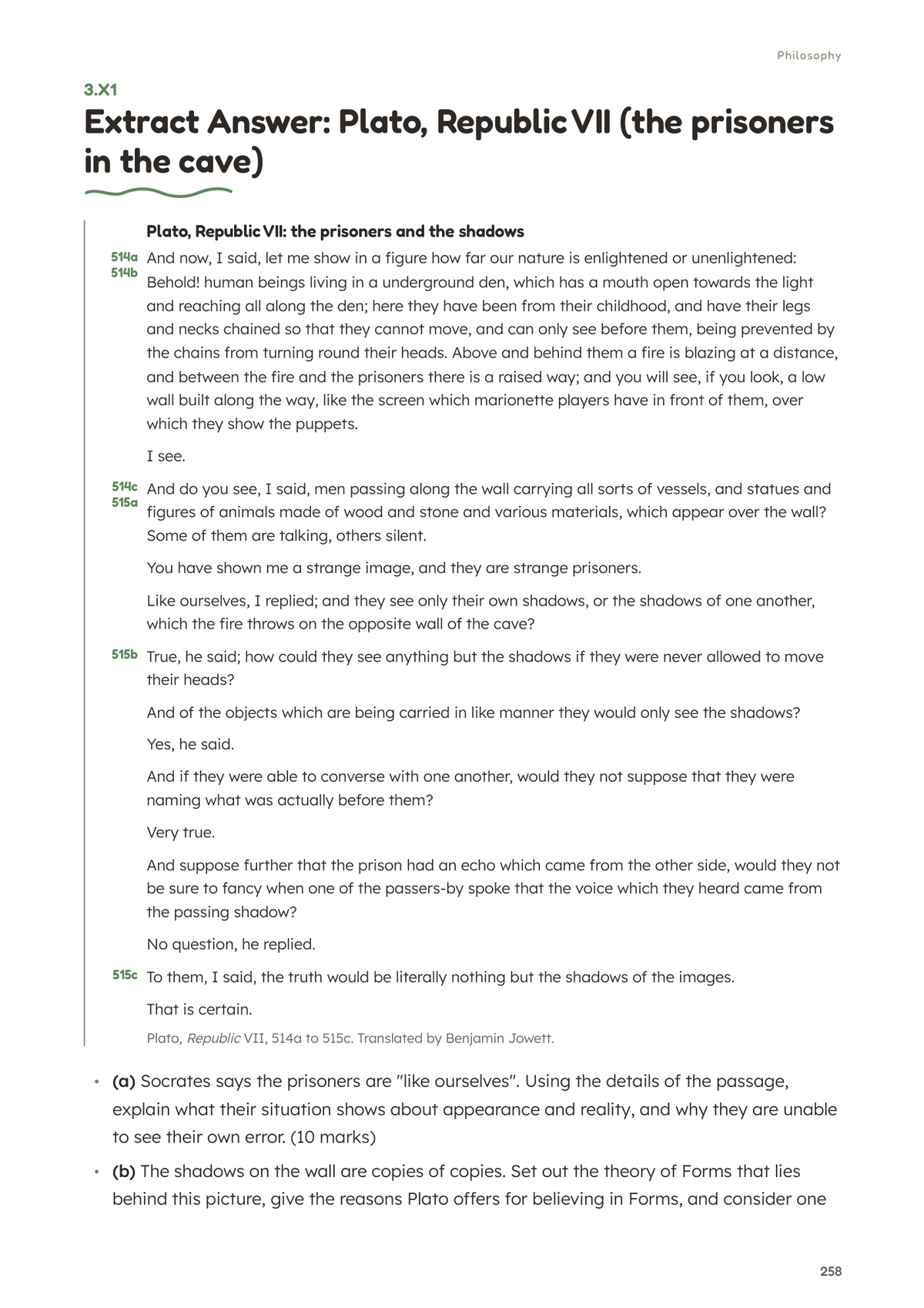
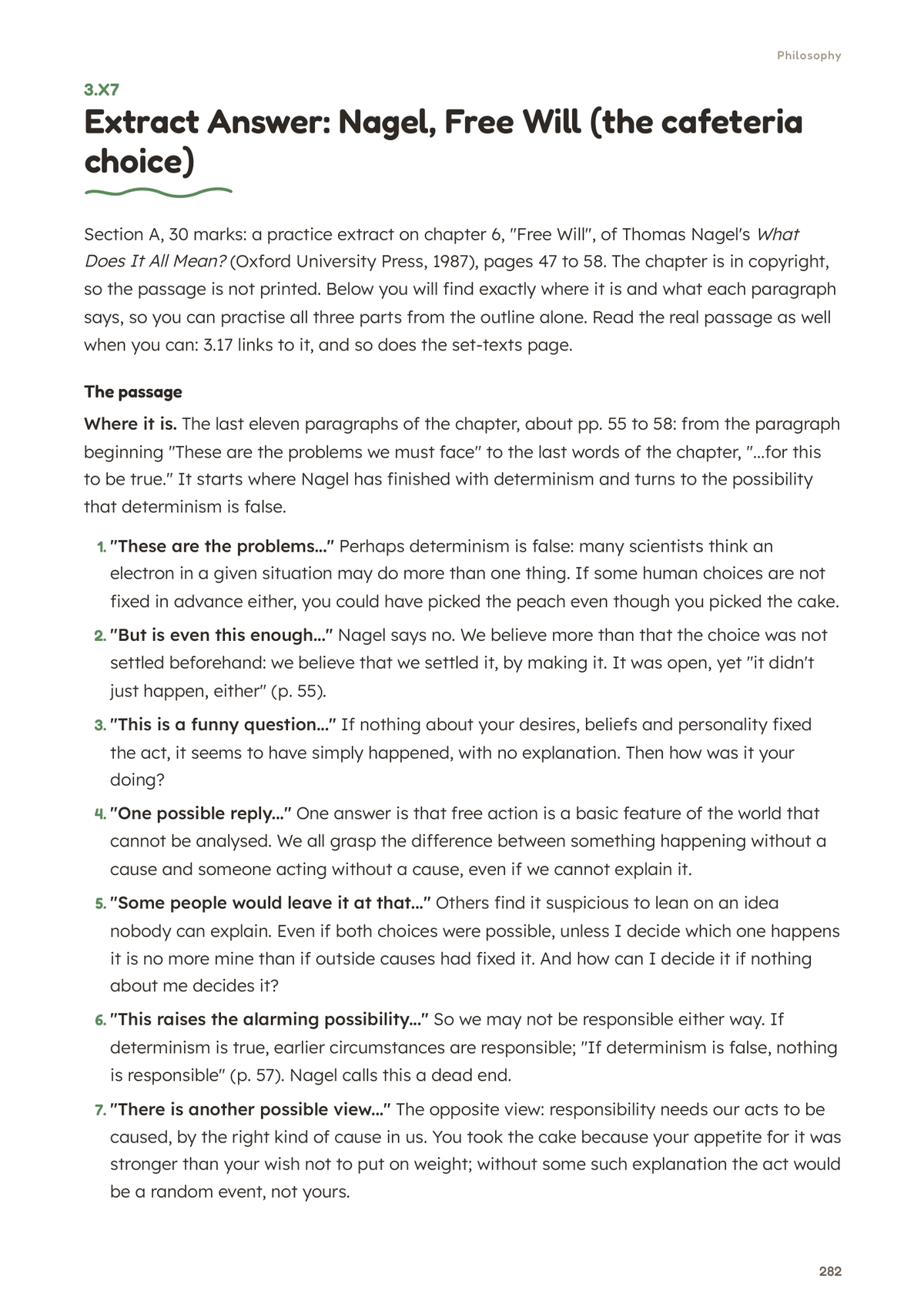
  • Extract answers: Plato, Republic VII (the prisoners in the cave); Plato, Republic VI and VII (the Line and the Cave); Plato, Republic VII (the return and the reluctant rulers); Aristotle, Politics I.2 (the political animal); Rousseau, Social Contract I.1 and I.3 (chains, force and right); Rousseau, Social Contract I.6 (the social pact); Nagel, Free Will (the cafeteria choice); Voltaire, Candide ch. I (Pangloss's lessons); Camus, The Myth of Sisyphus (the descent); Descartes, Meditation I (the dream); Descartes, Meditation II (I am, I exist); Locke, Essay II.i (white paper); Hume, Treatise 1.1.1 (impressions and ideas); Searle, The Mind-Body Problem; Searle on Speech Acts and Grice on Conversation
verified

How do we know the answers are right?

  • Every truth table is worked out by a logic checker from the formula, not copied by hand
  • Each essay was written to the MATSEC syllabus, the past papers and the examiners' reports
  • Both books were then independently audited for accuracy and syllabus coverage
checklist

Which option should I choose?

  • Note Pack + Model Answers: both books, to learn the full syllabus and then practise full answers. Costs less than buying the two separately
  • Note Pack only: the 415-page notes covering the full syllabus
  • Model Answers only: the 6 logic papers and 66 essays, plus 15 extract answers
download

How do I receive it?

  • Sent as PDFs by email
  • Your download link arrives a few seconds after you pay
  • Nothing is posted, but you are free to print it
  • For your own personal use
visibility

Can I see a preview?

  • Yes, tap the cover or View sample pages at the top of this page to flick through real pages
update

Is it up to date?

  • Yes: it follows the current MATSEC AM 25 syllabus
  • We update our packs to match the syllabus
  • Bought from us before? Ask for the latest edition, free of charge
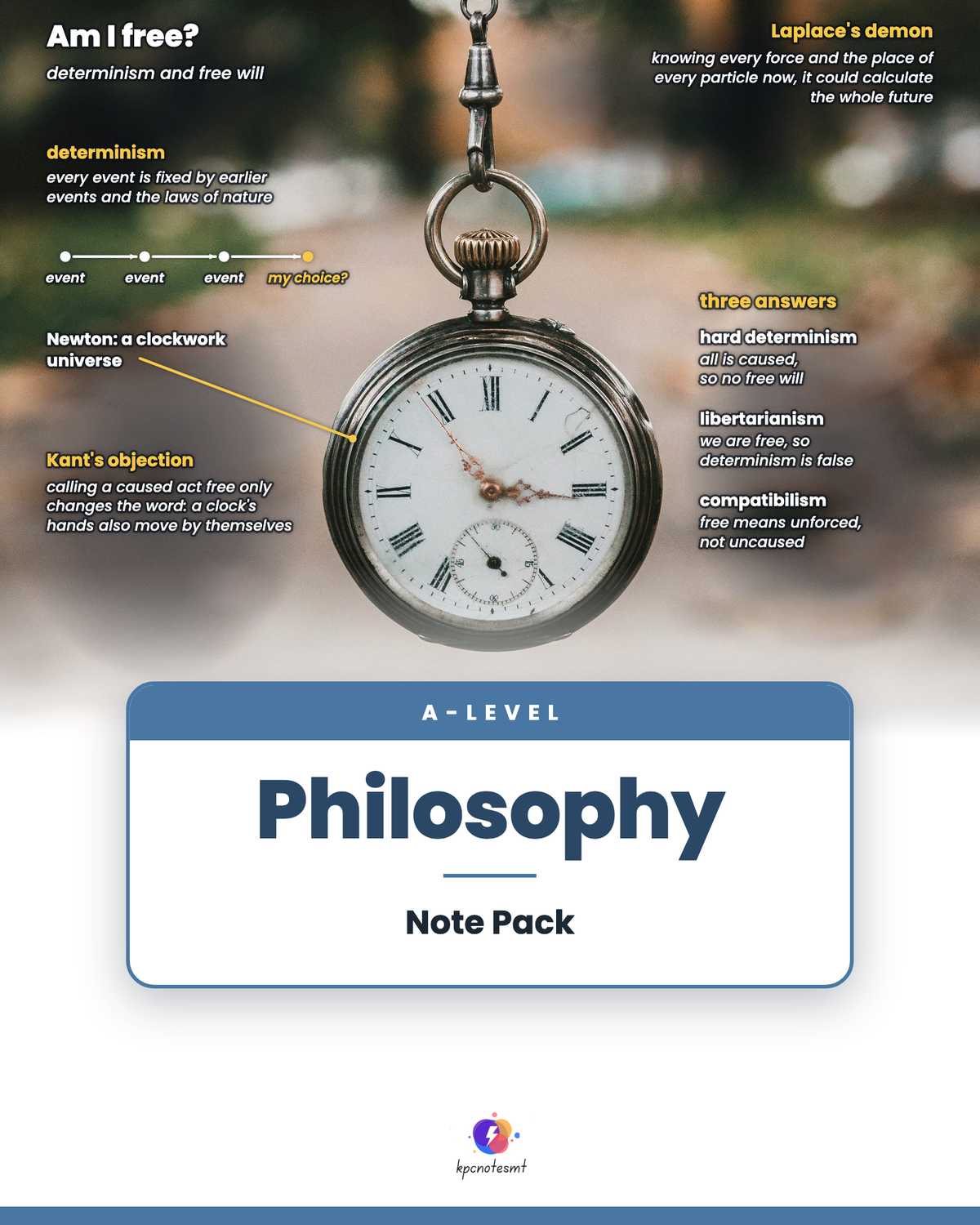
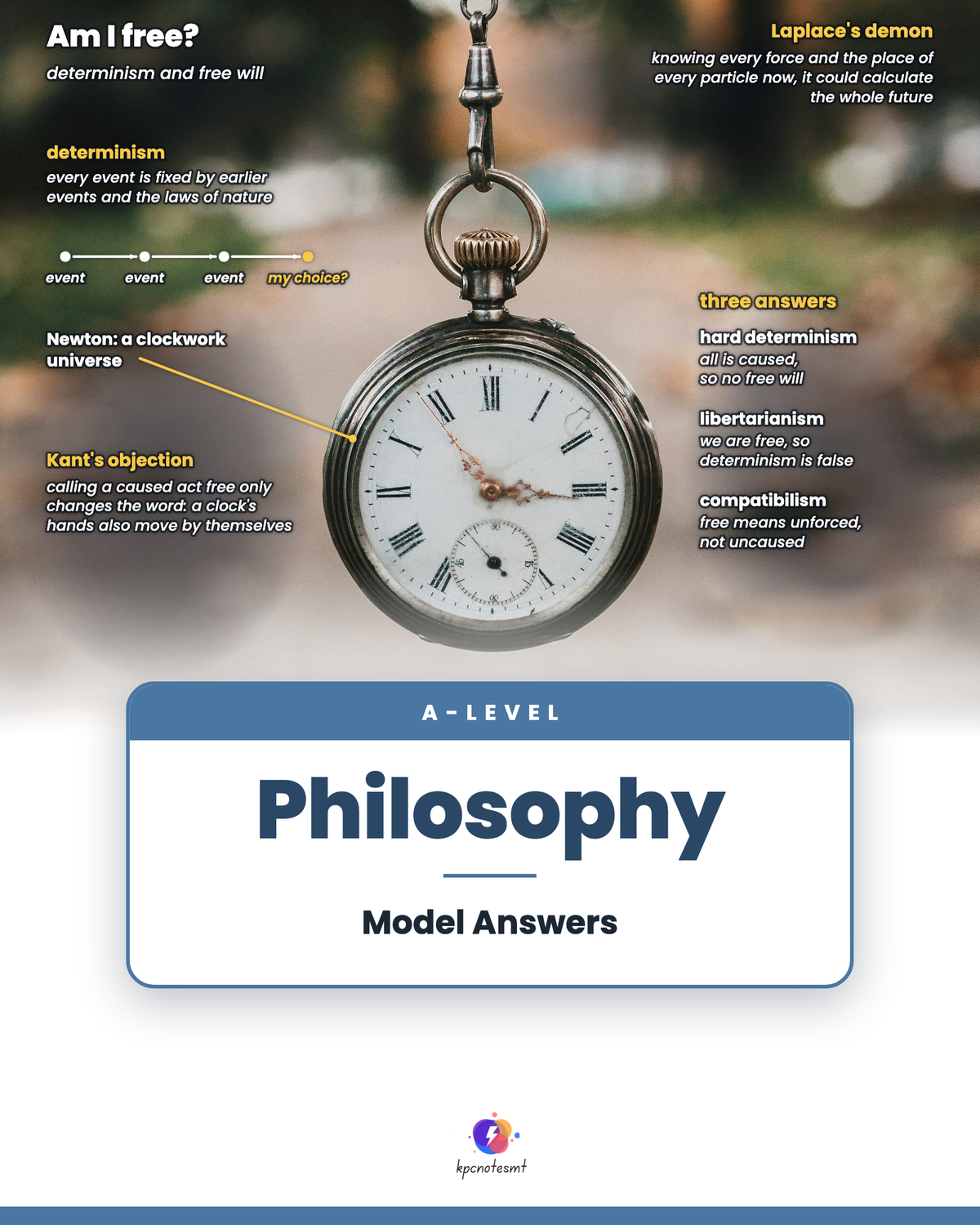
A-Level Philosophy Full Syllabus Pack cover (Note Pack and Model Answers): a pocket watch with notes on determinism and free will

A-Level Philosophy | Full Syllabus Pack

Regular price €74,95
Sale price €74,95 Regular price €89,90
SAVE 16% Sold out
  • Concise and to the point. Very helpful and Easy to follow. Amazing

    Ramona T.
  • Professional and Updated Notes, my son finds them very useful

    Omar Z.
  • Very easy and efficient to buy from the website.

    Lorraine M.
    check_box

    When will I receive the product/s after I purchase?

    Upon payment, our website will automatically provide you with a download link. This process takes just a few seconds.

    check_box

    Will I receive a hard copy?

    No, we offer digital access of our materials by default. This ensures you get instant access and allows us to send updates or new content easily. However, you are free to print the resources

    check_box

    The subject/s I need are not listed here

    We are continuously working on expanding our list of subjects. If your subject of interest is not listed, please message or email us with the subject you need. This helps us prioritise which subjects to add next!

    check_box

    Where can I see a preview?

    By selecting the subject listing you're interested in, you can preview sample pages included among the product image.

    In the case that the subject does not have any samples uploaded, please message us on Facebook!

    check_box

    Will these resources still help students sitting for exams in 2027/2028?

    Yes, regardless of how the syllabus changes, working through questions will always be an effective way to grasp topics and ultimately perform well in exams. We update our resources every year to reflect any syllabus changes. All previous clients receive the latest updates free of charge when requesting the updated copy.

    Black November

    Free flashcards with this pack

    View full details

    Why KPC Notes?

      Private Lessons
    One Time Payment
    Self-Paced Learning
    No Scheduling